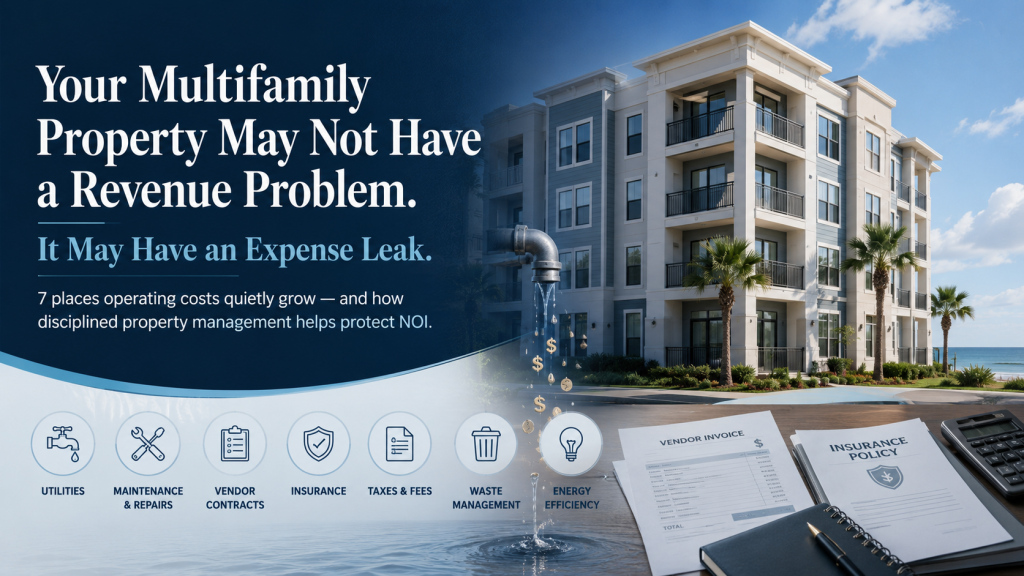
Seven places operating costs quietly grow and how disciplined property management helps protect NOI
Your rents have increased. Occupancy looks reasonably strong. Money is coming in.
So why does the property still feel less profitable?
The answer may not be on the revenue side of the financial statement. It may be hiding in small operating inefficiencies that quietly reduce net operating income, also known as NOI.
This matters even more for multifamily owners along the Alabama Gulf Coast. Insurance, labor, repairs, utilities, storm preparation, humidity related maintenance, and vendor costs rarely move in a favorable direction. National Apartment Association data shows that insurance costs increased 10.8 percent in 2024, following a 25 percent increase in 2023. Independent rental owners now identify operating expenses as their leading business challenge.
When rent growth cannot keep pace with rising costs, protecting performance requires more than raising rents. It requires finding the leaks.
1. Deferred maintenance becomes emergency maintenance
A slow plumbing leak is manageable. Water damage behind a wall is not.
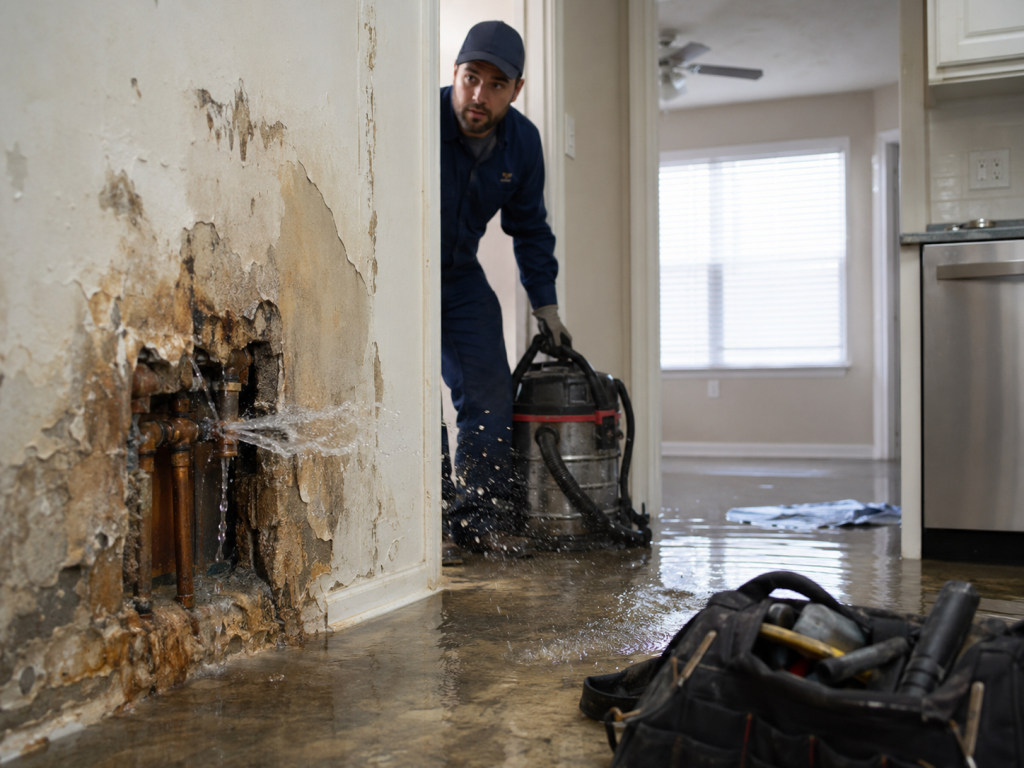
The same is true for drainage problems, aging HVAC systems, damaged siding, roof concerns, exterior wood rot, and moisture intrusion. Baldwin County humidity and Gulf Coast storms have a way of turning small maintenance issues into very expensive surprises.
Routine inspections help identify problems while the solution is still relatively simple.
2. Slow make ready timelines create hidden vacancy
A vacant unit does not stop costing money just because no resident is living there.
Utilities continue. Lawn care continues. Insurance continues. Loan payments continue.
Every unnecessary day spent waiting for cleaning, repairs, paint, flooring, inspection, or vendor follow through is another day without rental income.
A disciplined make ready process establishes the scope of work quickly, schedules vendors promptly, verifies completion, and gets the unit back on the market.
3. Vendor work lacks consistent oversight
Most expense leaks do not arrive with flashing lights and a marching band. They appear as repeat service calls, vague invoices, inconsistent pricing, incomplete repairs, and work that no one confirms was actually finished.
A clear maintenance process should document:
• What was reported
• What work was authorized
• Which vendor completed it
• What the repair cost
• Whether follow up was needed
• Whether the same issue has happened before
Without that information, owners may pay repeatedly for symptoms while the actual problem remains.
4. Service failures increase resident turnover
Residents do not base renewal decisions on rent alone.
Maintenance response, communication, property upkeep, and confidence in management all influence whether someone stays. Recent resident experience research found that property managers often underestimate how much maintenance and property conditions affect renewal decisions.

Resident turnover brings cleaning, repairs, marketing, leasing, vacancy, and administrative costs. Sometimes the most profitable new lease is the renewal that prevents an unnecessary turnover.
That is why renewal planning should begin well before the lease expiration date.
5. Poor documentation creates expensive uncertainty
Incomplete records make nearly every difficult situation harder.
Move in condition disputes become harder to resolve. Collections become harder to support. Insurance claims become harder to document. Recurring maintenance problems become harder to identify.
Owners also lose the ability to answer basic questions such as:
Why did repairs increase?
Was this damage new?
Has this vendor worked on the same issue before?
What condition was the property in six months ago?
Strong documentation protects more than the file. It protects decision making.
6. Insurance risk is never actively managed
No inspection schedule or maintenance program can eliminate insurance increases, especially on the Gulf Coast.
But owners can still manage the property’s risk profile.
Routine condition records, preventive maintenance, documented repairs, storm preparation, vendor invoices, inspection photos, and organized claim information help create a clearer picture of how the property is being maintained.
Insurance may remain volatile, but property condition should not be a mystery.
7. Reports show numbers without explaining them
A monthly statement tells an owner what happened.
Useful property management reporting explains why it happened and what should happen next.
Owners should be able to see whether expenses increased because of a one time repair, recurring problem, vendor pricing change, resident turnover, utility issue, deferred project, or preventable failure.

A page full of numbers is not insight. It is accounting camouflage unless someone explains what the numbers mean.
Better systems help protect property performance
Level Property Management Group uses an organized operating system designed to give multifamily owners greater visibility and control.
That system includes:
• Detailed move in inspections
• Routine property inspections
• Quarterly drive by reviews
• Thorough move out documentation
• Maintenance coordination and vendor follow through
• Early renewal planning
• Expense and repair tracking
• Monthly reporting with owner recommendations
The goal is not simply to collect rent and respond when something breaks.
The goal is to identify problems earlier, reduce preventable expenses, protect resident relationships, and help owners make better decisions about their property.
Find the leak before the next expensive surprise finds you
We will examine vacancy exposure, turnover patterns, maintenance processes, vendor coordination, documentation, and reporting gaps to identify where stronger systems could help protect your property’s NOI.
Level Property Management Group
Proven Experts in Baldwin County Property Management
251.210.1664