
If you’re a landlord, the phrase “security deposit law” might make you feel one of two ways:
Curious but nervous
Looking for a loophole that doesn’t exist
Let’s calm the nerves and boost your confidence with crystal-clear rules that are actually enforceable in Alabama.
Quick Answer
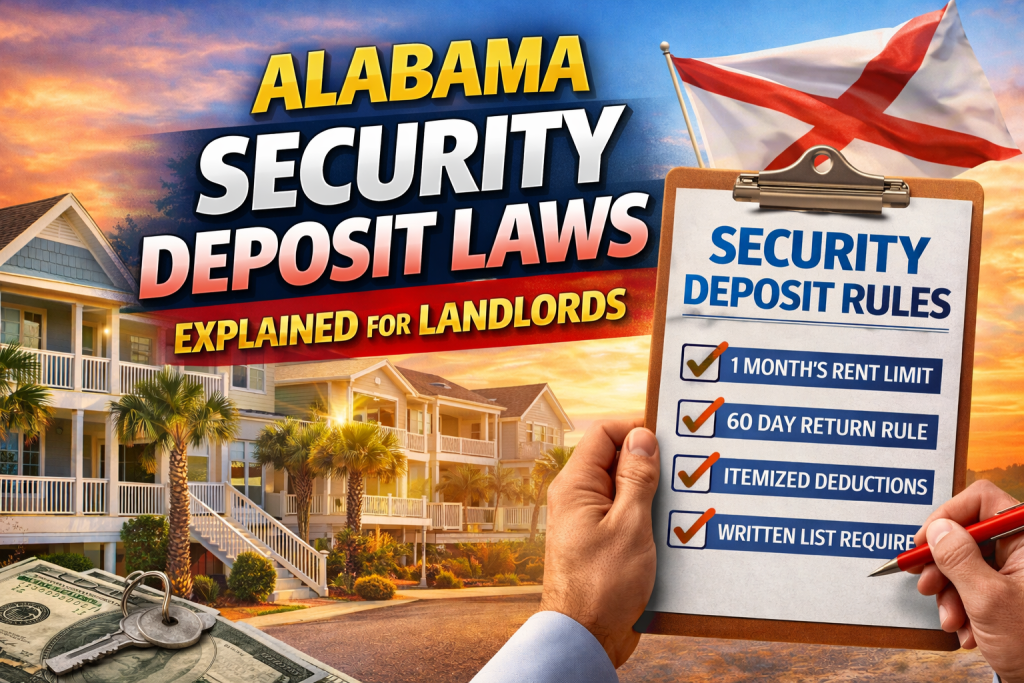
In Alabama, landlords cannot charge more than one month’s rent as a security deposit for a residential rental. The landlord must return the security deposit within 60 days after the tenancy ends, minus any lawful, itemized deductions for unpaid rent, property damage beyond normal wear and tear, and other allowable charges. If deductions are made, the landlord must provide a written, itemized list of those charges with the returned funds.
Now let’s unpack what this actually means for you in Baldwin County.
How Much Can You Charge for a Security Deposit in Alabama?
Here’s the straightforward rule:
✔ The most you can ask for in security deposit is one month’s rent.
That’s it.
No multiple deposits. No secret “cleaning holding fee” buried in the lease.
One month’s rent—that’s the ceiling.
If your rent is $1,800, your maximum lawful deposit is $1,800.
If you charge more, you’re giving tenants a legal hook they can use against you.
What About Pet Deposits?
Alabama law allows landlords to collect an additional, reasonable deposit specifically for pets beyond the standard one-month security deposit limit. This pet deposit should be clearly defined in the lease and handled the same way as any other refundable deposit, meaning it must be returned within 60 days minus any lawful, itemized deductions for pet-related damage beyond normal wear and tear. However, assistance animals, including service animals and properly documented emotional support animals, are not considered pets under federal Fair Housing laws, and landlords cannot charge a pet deposit, pet fee, or pet rent for them.

When Do You Have to Return the Deposit?
Alabama law gives landlords 60 days to return the deposit after the tenant moves out.
Not 30. Not “once we get around to it.”
60 days maximum.
And if you withhold any portion of it, you have to send a written, itemized list explaining every deduction.
No exceptions.
No “I told them verbally.”
Everything in writing.
That’s not just best practice—it’s the law.
What Can You Legally Deduct from the Deposit?
You can deduct only a few specific things:
- Unpaid rent
- Property damage beyond normal wear and tear
- Cleaning costs if the unit was left unusually dirty
- Repair costs for damage caused by the tenant
Here’s the kicker:
Normal wear and tear is not deductible.
If the damage is beyond everyday living—like holes in walls or broken fixtures—that’s deductable.
If it’s normal use? You have to eat that cost.
What Must Be Included with Deductions?
If you deduct anything, Alabama requires:
✔ A written itemized list of each deduction
✔ The amount charged for each item
✔ Any remaining deposit balance returned with the list
Don’t just deduct and send back a number.
Send back a paper trail.
That’s how you protect yourself if a tenant disputes it.
What Happens If You Don’t Follow the Rules?
If you fail to return the deposit within 60 days or you improperly withhold money:
You may be liable for:
✔ The full amount of the deposit
✔ Court costs
✔ Possibly additional damages
In other words, shortcuts now can become costly fights later.
Compliance isn’t boring.
It’s profitable.
Security Deposit Tips for Baldwin County Landlords
Inspect early and often.
Walk through before move-in with the tenant and take timestamped photos.
Document everything.
If you document condition in writing and with images, it makes deductions defensible.
Communicate.
When tenants know you follow the law, disputes drop significantly.
Use standardized forms.
Don’t improvise. Alabama is specific. A sloppy form invites a legal challenge.

A Simple Checklist: Alabama Security Deposit Rules at a Glance
What you can charge
One month’s rent maximum
When to return it
Within 60 days after tenancy ends
What you can deduct
Unpaid rent
Unusual cleaning
Damage beyond normal wear and tear
What you must provide
Written itemized list with deductions
Final Thought
Understanding security deposit laws isn’t just about compliance.
It’s about credibility.
A landlord who follows the law protects income, reduces disputes, and builds a reputation that attracts better tenants.
And in Baldwin County’s competitive rental market—where good tenants are gold—that matters.
Wondering if your current lease and deposit handling are in compliance with Alabama laws?
Let’s walk through it before it becomes a problem.
Call 251.210.1664.
Disclaimer: This blog should not be used as a substitute for legal advice from a licensed attorney in your state. Laws change, and this post might not be updated at the time of your reading. Please contact us for any questions you have in regard to this content or any other aspect of your property management needs.