Pricing an investment property is different than pricing your personal home.
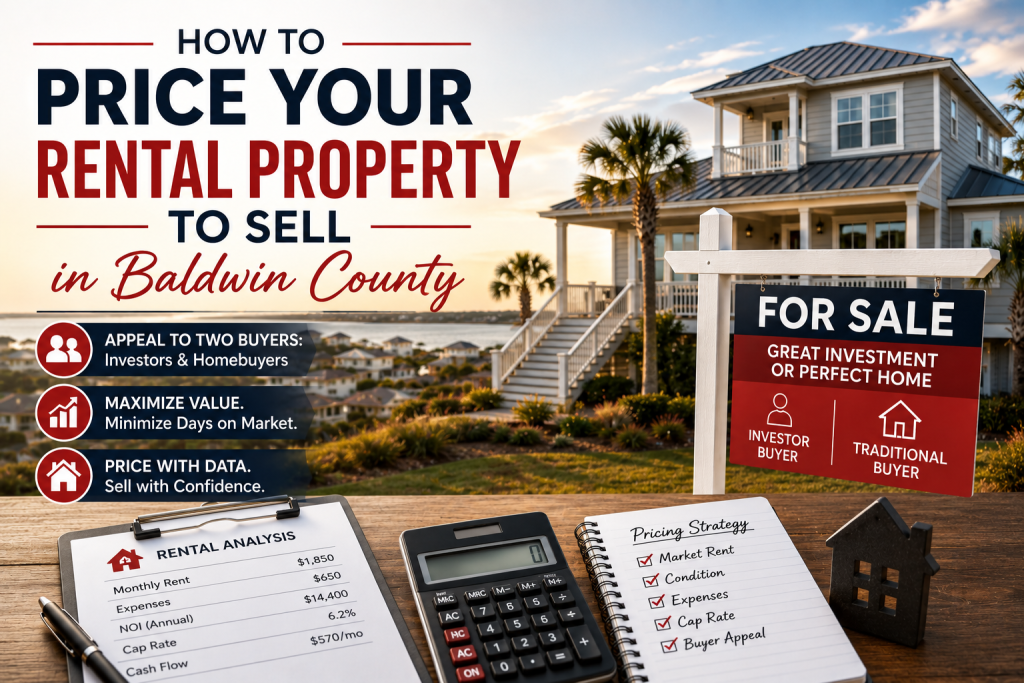
Yes, all the traditional real estate factors still matter:
- Location
- Condition
- Comparable sales
- Days on market
- Buyer demand
- Pricing strategy
But when you are selling a rental property, there is another layer that many sellers overlook:
👉You are not just selling a home.
👉 You are selling an investment.
That means your price has to make sense emotionally and financially.
Investors are analyzing numbers, cash flow potential, maintenance costs, insurance expenses, occupancy rates, and future ROI before they ever schedule a showing.
And in Baldwin County’s evolving rental and investment market, pricing a rental property incorrectly can quickly scare away serious buyers.
Here are the most important things rental property owners should consider before putting an investment property on the market.
1. You May Be Pricing for TWO Different Buyers
Selling a rental property is unique because you may actually be marketing to two completely different audiences at the same time.

Buyer Type #1: The Investor
Investors focus heavily on:
- Rental income
- ROI potential
- Expenses
- Insurance costs
- Cash flow
- Future maintenance
- Cap rate performance
They are evaluating the property like a business decision.
Buyer Type #2: The Traditional Homebuyer
A first-time buyer or upsize buyer is often focused more on:
- Monthly payment
- Move-in readiness
- Emotional appeal
- Layout and design
- School zones
- Neighborhood feel
- Backyard space
- Lifestyle
They are buying a place to live, not just an investment.
Why This Matters
Sometimes a rental property is best positioned as:
✅ An investment opportunity
And sometimes it may actually sell for MORE money by appealing to:
✅ A traditional owner-occupant buyer
The strategy depends on:
- The condition of the property
- Current lease situation
- Rental income
- Neighborhood rental and buyer demand
- Financing realities
- Which buyer pool is strongest right now
The most successful pricing strategies understand exactly who the most likely buyer is before the property ever hits the market.
2. Investors Buy Numbers, Not Emotions
Traditional homebuyers may fall in love with:
❤️ The kitchen
❤️ The backyard
❤️ The memories
Investors?
They are looking at:
📊 Rental income
📊 Expenses
📊 Cash flow
📊 Cap rate
📊 ROI potential
A beautiful property with weak numbers can struggle to attract investors. Meanwhile, a less emotional property with strong returns may move quickly.
3. Current Rental Income Matters
One of the first questions investors ask is “What is the property currently producing?”
They want to know:
- Current rent amount
- Lease terms
- Security deposits
- Renewal history
- Vacancy history
- Utility responsibilities
- HOA costs
- Maintenance history
If the rent is significantly below market value, investors may see upside potential.
If the rent is unrealistically high and unstable, buyers may view it as risky.
4. Deferred Maintenance Can Destroy Investor Interest
Rental owners sometimes become so focused on occupancy that maintenance gets delayed.
Investors notice this immediately. 👀
Big red flags include:
- Aging roofs
- HVAC concerns
- Water intrusion
- Old plumbing
- Poor exterior maintenance
- Insurance-related issues
In Baldwin County especially, buyers pay close attention to:
- Wind mitigation
- Insurance costs
- FORTIFIED roof potential
- Storm resilience
- HVAC age in coastal climates
A property needing major work may still sell, but pricing has to reflect the risk and repair costs.
5. Occupied Properties Can Be Harder to Show
Selling a tenant-occupied property creates challenges that owner-occupied homes do not have.
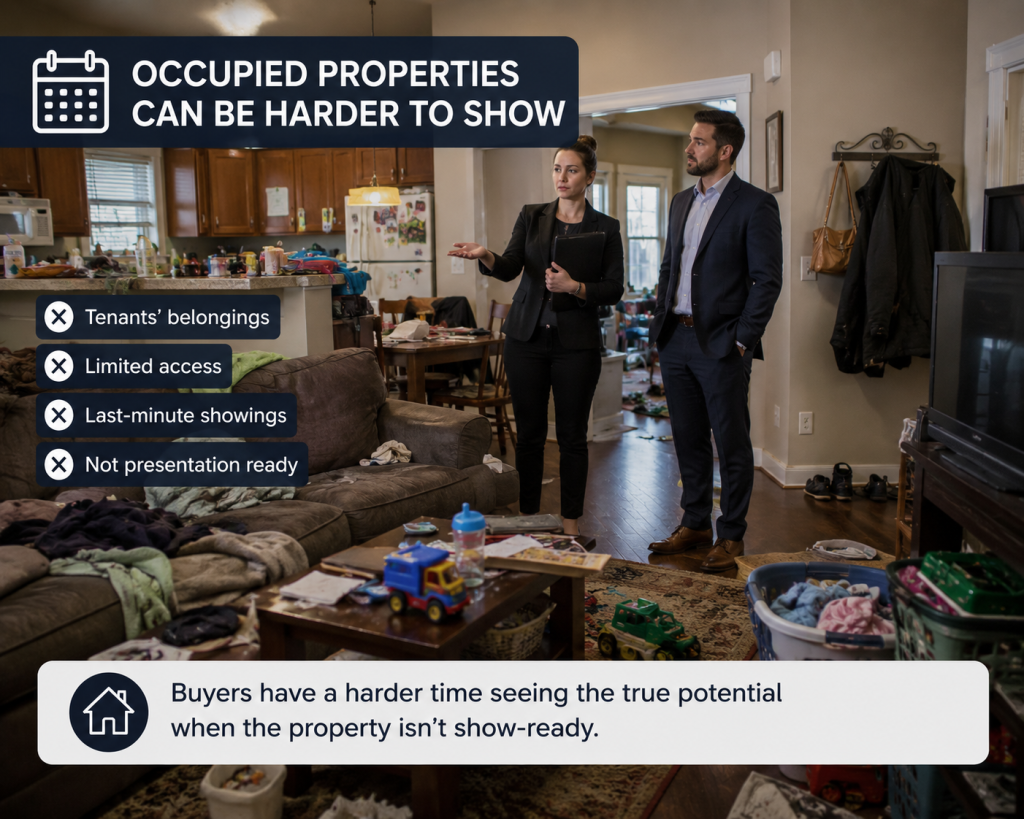
Sometimes:
- Tenants are uncooperative
- Showings are limited
- The property is rarely presentation-ready
- Buyers cannot fully evaluate the home
This can reduce urgency and slow momentum.
A well-managed property with cooperative tenants and proper communication often performs much better during the sales process.
6. Market Rent and Actual Rent Are Different Things
Many landlords price based on what the property could rent for. Investors care about what it is producing today.
If:
- The current rent is below market
- The lease expires soon
- The tenant has been there for years
- Expenses are high
buyers may adjust what they are willing to pay.
Strong documentation and a clear rental analysis can help justify value.
7. Cap Rate Expectations Matter
Experienced investors are comparing your property against other opportunities.
That means they are evaluating:
- Net operating income
- Expenses
- Insurance costs
- Taxes
- Expected repairs
- Potential appreciation
If the numbers do not align with current investor expectations, buyers may move on quickly.
This is especially important in:
- Multi-family properties
- Duplexes
- Commercial investments
- Vacation rentals
- Long-term rental portfolios
8. Days on Market Matter Even More for Investment Properties
When an investment property sits too long, investors start assuming:
- The numbers do not work
- The property is overpriced
- There are hidden maintenance issues
- The tenant situation is difficult
Momentum matters in the investment world too.
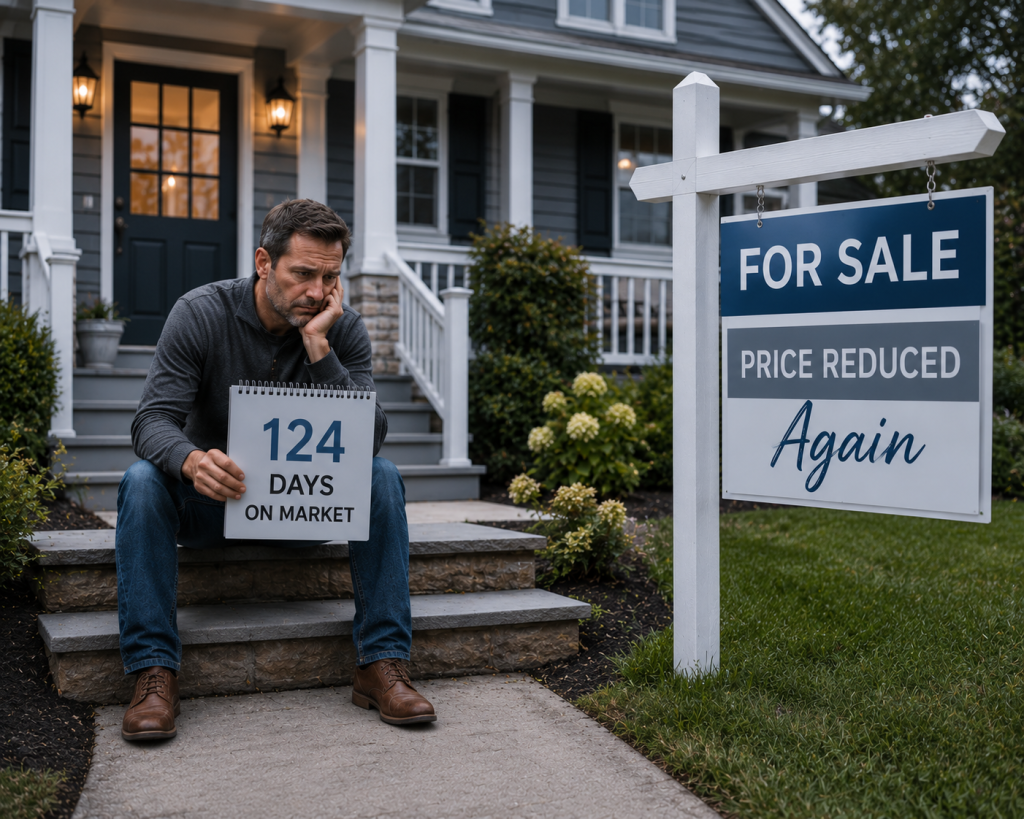
The best interest often happens during the first few weeks.
9. Rental Vacancy Can Be an Opportunity… or a Problem
A vacant property gives buyers easier access and immediate flexibility. This is great for the traditional home buyer.
For the investment buyer it can also raise questions:
- Why did the tenant leave?
- How long has it been vacant?
- Is the rental demand weakening?
- Does the property need repairs?
The key is positioning the vacancy strategically and pricing appropriately.
3 Common Pricing Mistakes Rental Property Sellers Make
Mistake #1: Pricing Based on Appreciation Alone
Many owners see neighboring homes selling at strong prices and assume their rental property should command the same premium.
But investors evaluate properties differently than emotional homebuyers.
Income performance matters.
Mistake #2: Ignoring Repair and Deferred Maintenance Costs
Owners sometimes underestimate how heavily investors weigh future repair expenses.
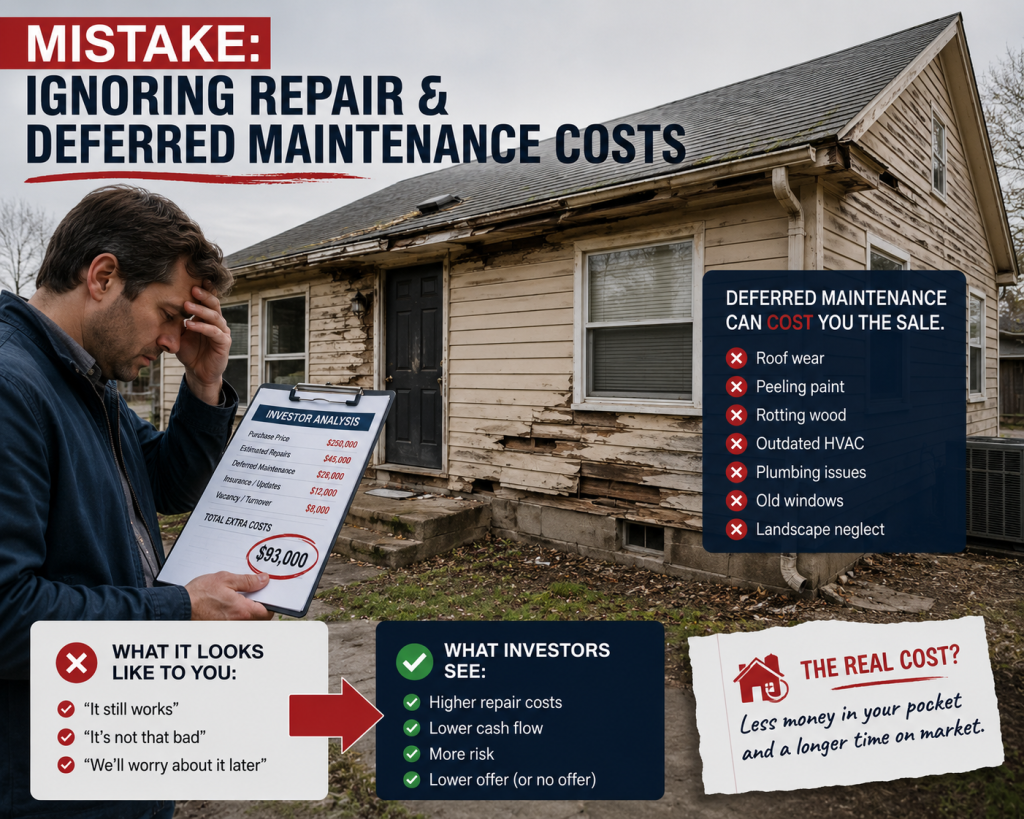
What feels like “minor deferred maintenance” to an owner may look like a major expense to a buyer.
Pricing must reflect condition realistically.
Mistake #3: Forgetting the Investor’s Math
Investors are running calculations quickly.
If:
- Cash flow feels weak
- Insurance feels too high
- Expenses seem unstable
- Rent feels capped
- Repairs look expensive
they often move on immediately.
No amount of emotional attachment changes the numbers.
Final Thoughts: Selling a rental property successfully requires more than simply putting it on the market.
The strongest investment property sales typically combine:
✅ Strategic pricing
✅ Accurate financial analysis
✅ Market-aware positioning
✅ Professional presentation
✅ Strong local expertise
At Level Property Management Group, we understand both sides of the equation because we work with rental owners and investors every day across Baldwin County. Working closely with our sister company, Ashurst Niemeyer Real Estate, we bring decades of insight to the table. We know what both investors and traditional home buyers are looking for, what concerns them, and how to position rental properties strategically in today’s market.
Our quick online Property Potential Report is a great starting point. But the real advantage comes from a detailed property analysis with a local expert who understands rental performance, investor expectations, insurance trends, and the realities of managing property on the Alabama Gulf Coast.
Step 1: Click here for a free Property Potential Report.
Step 2: Meet with a Rental Real Estate Expert. Call 251.210.1664